
Weed Control in Phoenix: Pre-Emergent Timing & Tips
Straight answers for Phoenix-area homeowners & property managers — from a licensed local landscaping contractor serving the Valley since 1999.
☎ (602) 439-5192 Request a Free Quote
- ROC #207713
- Licensed & Insured
- Family-owned since 1999
- 4.5★ · 865+ reviews
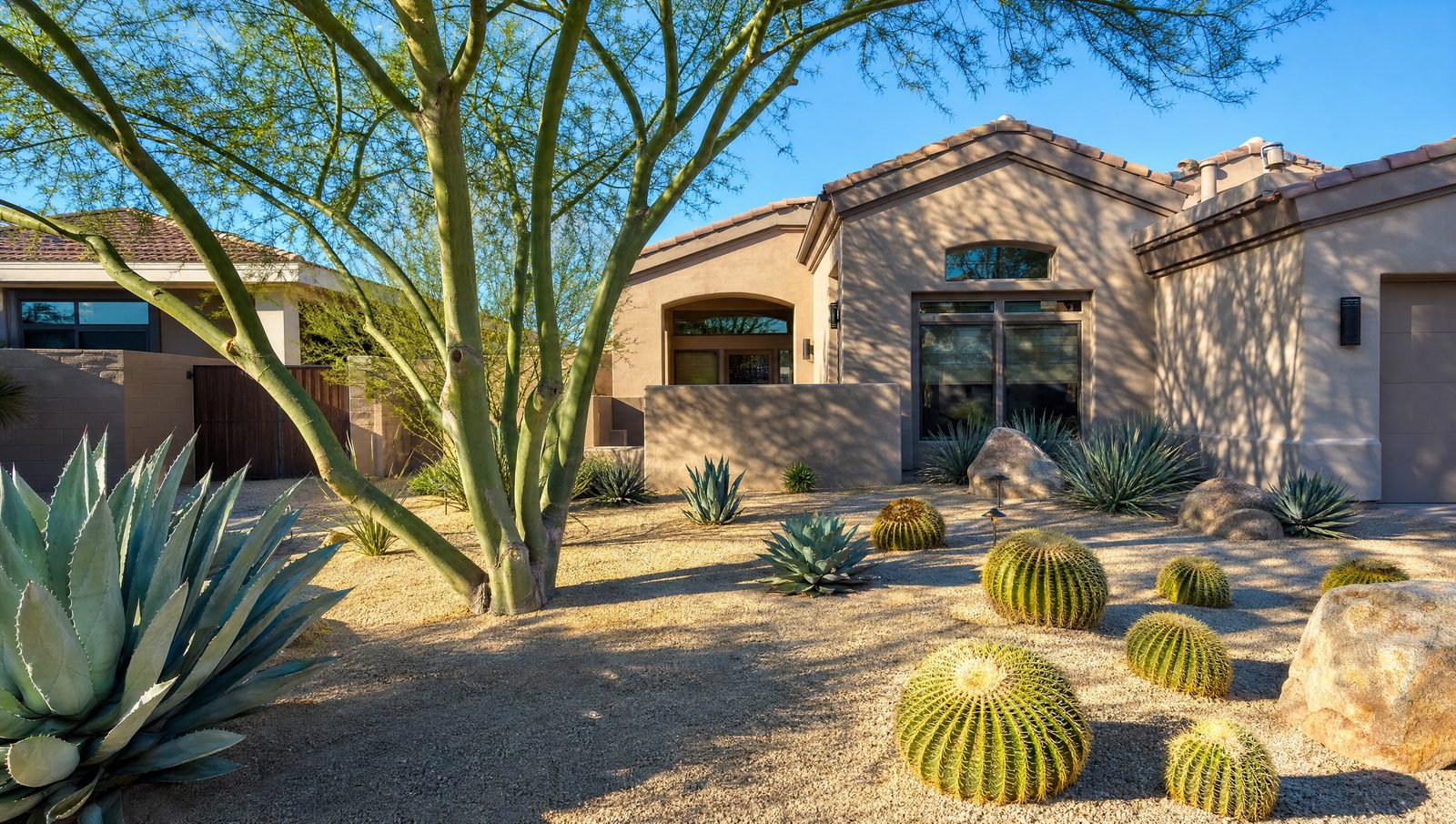
In the Phoenix low desert, a weed program comes down to three habits, not one product: apply pre-emergent twice a year — once in fall and once in late winter/early spring, timed to soil temperature rather than the calendar — follow up with post-emergent spot treatment once monsoon rain flushes a fresh crop of summer weeds through the gravel, and skip landscape fabric under rock, since a buried barrier just collects the wind-blown dust and debris that becomes its own seedbed. University of Arizona Cooperative Extension frames the calendar the same way: pre-emergent in fall for cool-season weeds, pre-emergent in spring for warm-season weeds, and a post-emergent product for anything already up. No program — UA's or ours — promises a weed-free yard forever; realistically, the goal is keeping the population low enough that a quick pull or spot spray handles what gets through. Victor's Landscaping builds both pre-emergent visits and post-monsoon cleanup into residential maintenance plans across the Valley.
When should I apply pre-emergent for weeds in Phoenix, and why twice a year?
Two windows, both set by soil temperature rather than a fixed date:
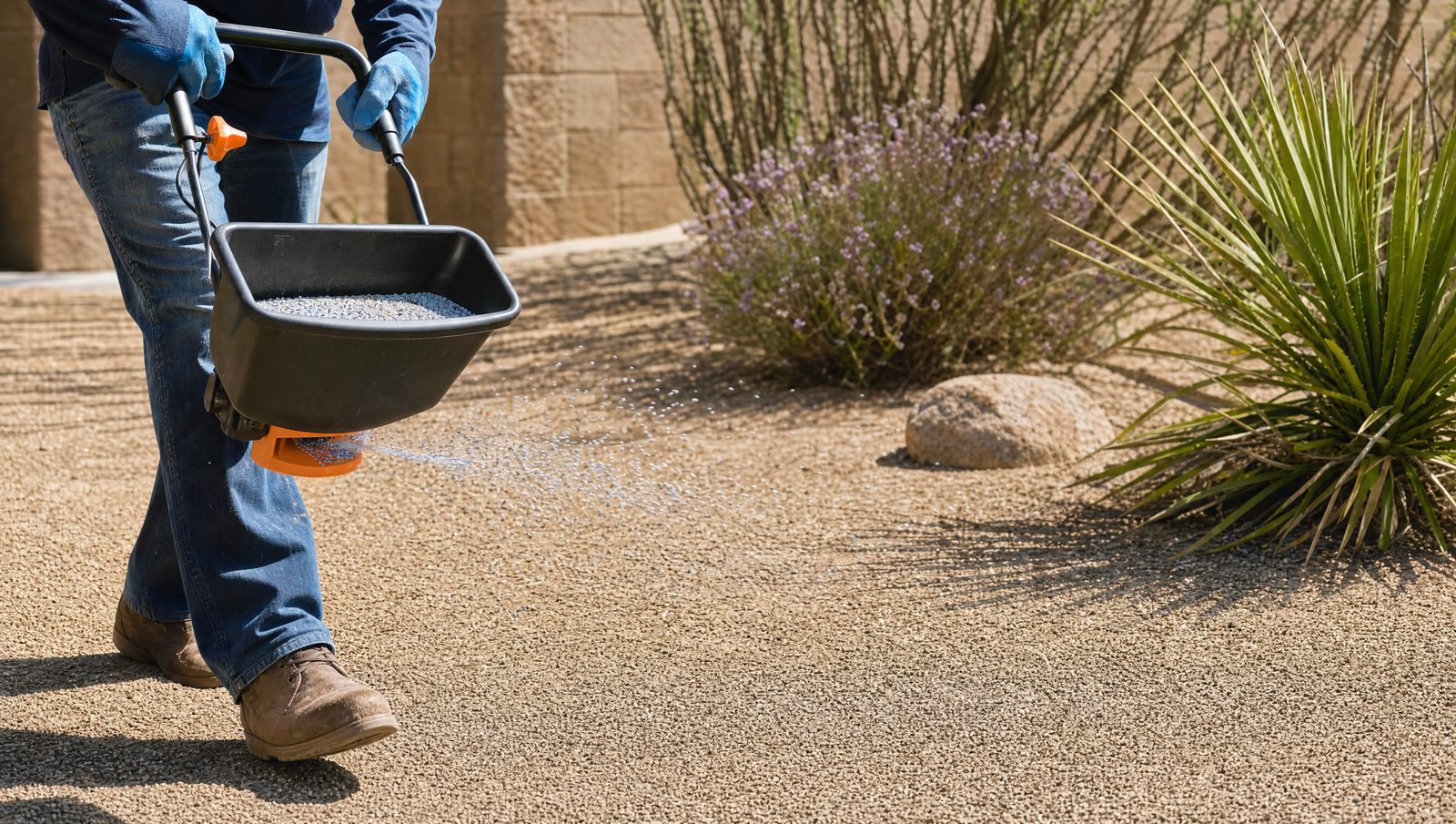
- Fall — late September into October: University of Arizona Cooperative Extension's low-desert turf research on winter annual weeds (Umeda, Kopec & Nair, az1885) documents that species like annual bluegrass typically emerge mid-to-late October as the season cools — the same cooling trigger that brings on other winter annuals like London rocket — so a pre-emergent applied in late September or early October gets ahead of that flush before it starts.
- Late winter into early spring — end of February through early March: UA's Turfgrass Extension newsletter puts the trigger at a soil temperature of roughly 50–55°F, which in the Phoenix and Tucson low desert normally arrives by the end of February or early March (compared with early-to-mid February in Yuma and mid-May in Flagstaff). Soil temperature, not the date on the calendar, is what actually matters — UA points growers to AZMET's free 2-inch soil-temperature data to track it.
These dates and soil-temperature thresholds come from UA's turfgrass research — sun-exposed gravel and bare ornamental beds can run a little warmer or cooler than mowed turf, so treat the windows above as a target range, not a date that flips on a single day.
Those two visits cover the two big Phoenix weed flushes: winter annuals like London rocket coming up as it cools, and warm-season weeds like puncturevine and grassy weeds coming up as it warms. One stubborn broadleaf holdout, spurge, germinates any time air temperature tops 60°F, so UA's own spurge guidance (AZ1572) calls for hitting it again in mid-summer on top of the spring round — which is effectively what a post-monsoon post-emergent pass covers (more on that below). Victor's runs the fall and late-winter/spring pre-emergent visits as standing dates on a maintenance plan so the soil-temperature window is never missed.
Fall pre-emergent · late Sep–OctAhead of winter annuals like London rocket
Spring pre-emergent · late Feb–early MarSoil hits ~50–55°F in the Phoenix/Tucson low desert
Post-monsoon post-emergent · Aug–SepCovers spurge and other summer flushes as spring pre-emergent fades
The Weed Control Calendar
Two pre-emergent visits a year, plus a post-monsoon post-emergent pass.
Rock and DG beds run the same calendar as planted beds — no fabric needed.
What's the difference between pre-emergent and post-emergent weed control, and when do I need each?
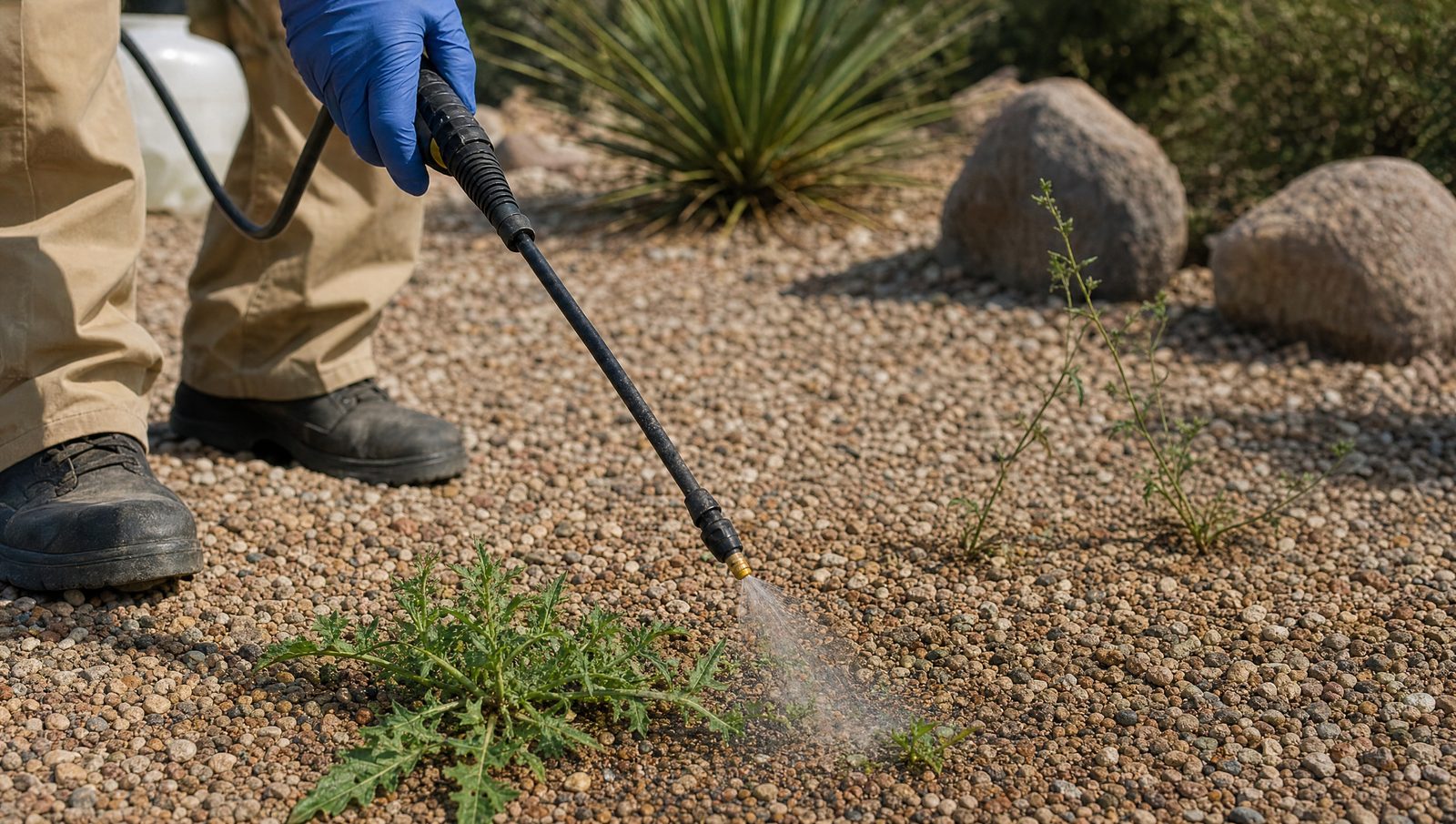
Pre-emergent herbicide stops germinating seeds below the surface — it has no effect on a weed that's already up. Post-emergent herbicide does the opposite: it's applied to actively growing weeds, and most post-emergent products have little to no residual effect in the soil, so they won't stop the next flush of seeds from sprouting (University of Arizona Cooperative Extension, Bulletin #23, Weed Management in the Landscape; AZ1572, Managing Spurge in the Landscape, Garden and Turf). In practice that means:
- Pre-emergent is the calendar-based prevention layer — the fall and late-winter/spring visits described above, aimed at the seed bank before it germinates.
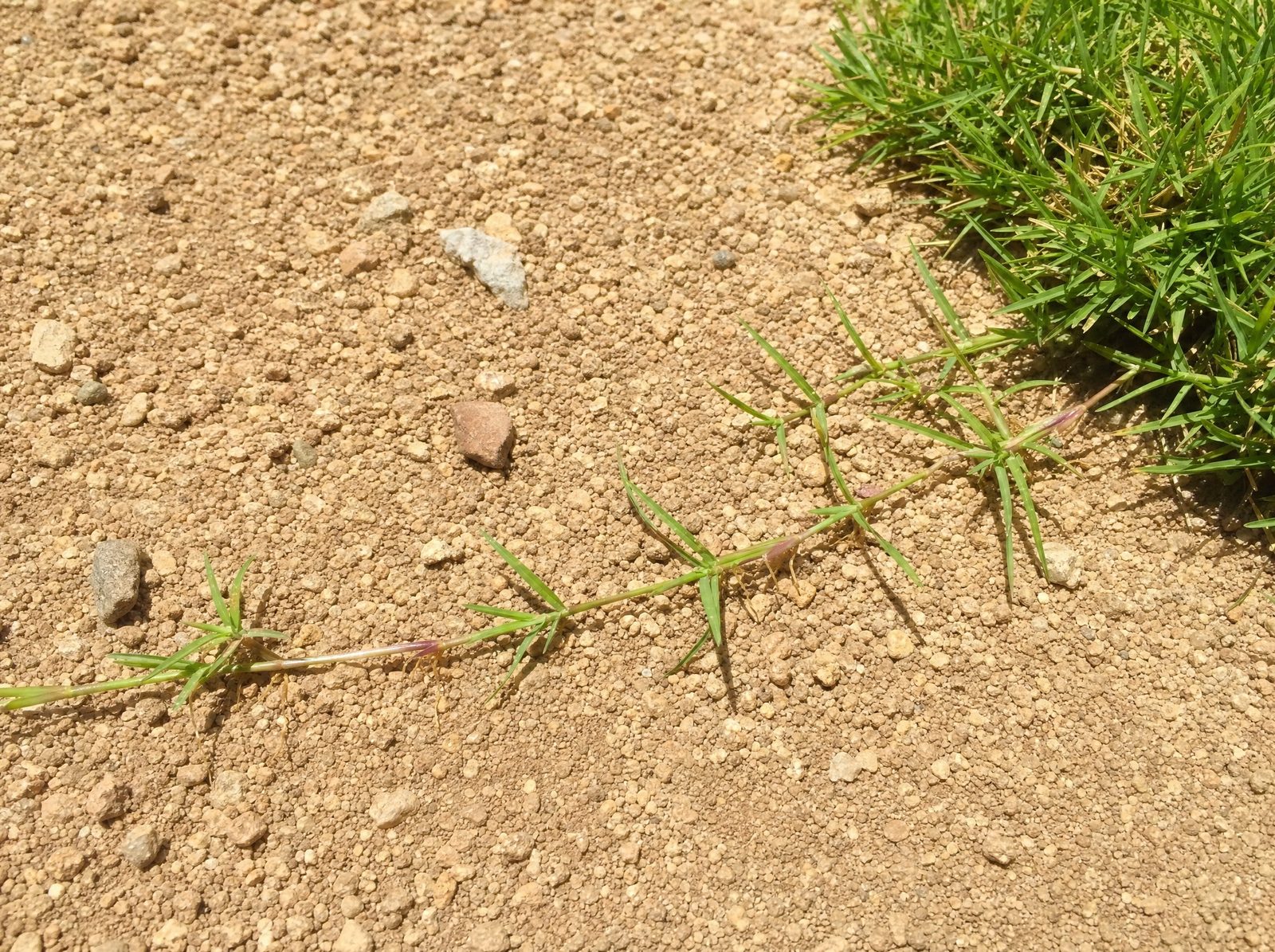
- Post-emergent is the reactive layer for whatever gets past that: weeds that sprouted from seed a pre-emergent application missed, plus true perennials like bermudagrass that spread from existing roots and runners rather than starting fresh from seed every year, so no amount of pre-emergent stops them once they're established.
Most Phoenix properties need both running on their own schedules, not one or the other — which is the core of the weed control program Victor's runs for residential and commercial clients across the Valley.
Need a hand?
Sick of pulling weeds every time it rains?
Two pre-emergent visits a year plus post-monsoon cleanup — on a maintenance plan, we handle the calendar.
Why do weeds explode right after monsoon rain, and what should I do about it right now?
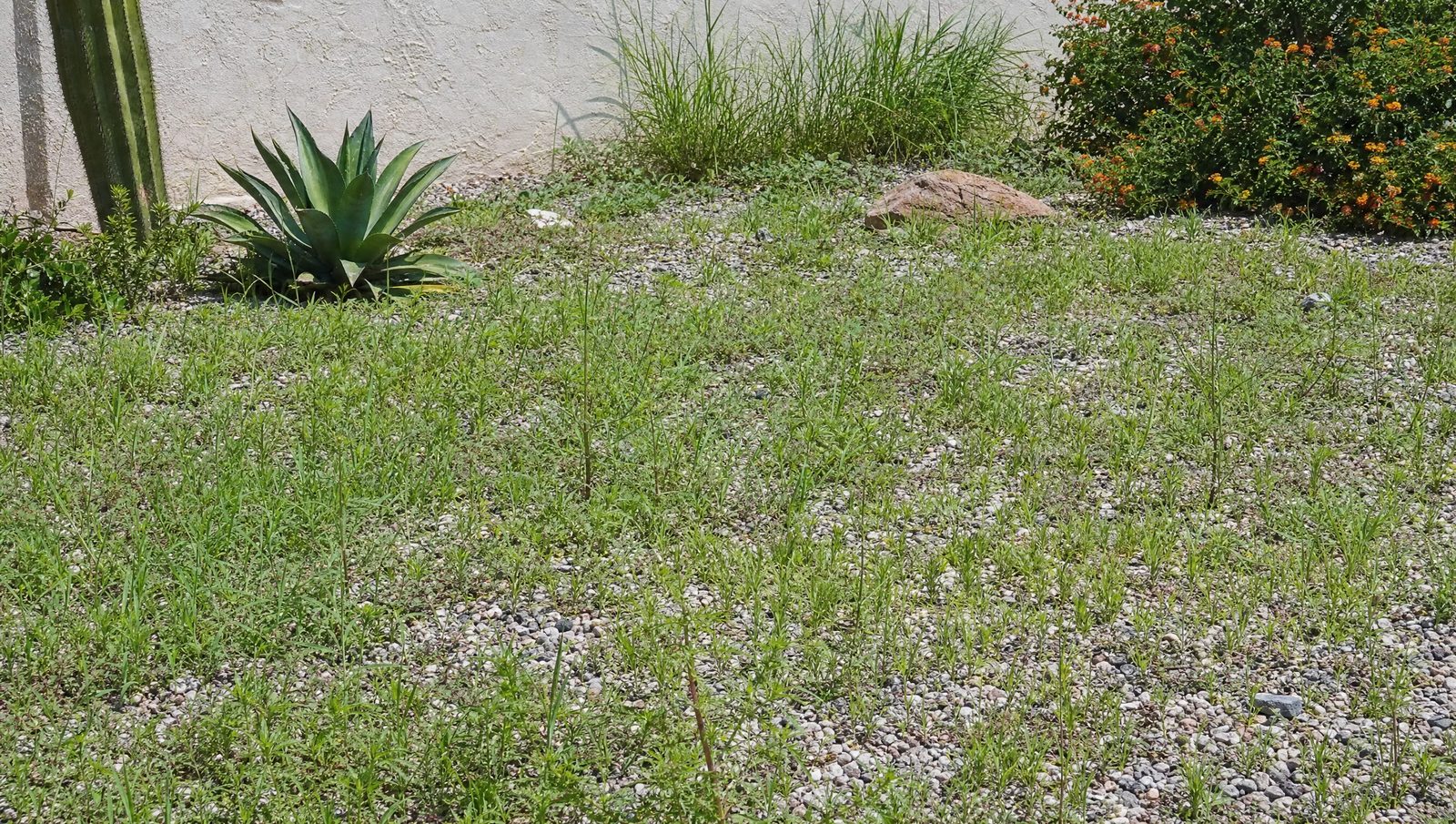
Plenty of Phoenix weed seed sits dormant in bone-dry soil all summer — heat alone doesn't wake it up. What breaks that dormancy is a real soaking, and that's exactly what a monsoon storm delivers: warm soil plus a sudden inch of moisture is close to ideal germination conditions, so a single storm can push a visible new crop of weeds up within days. University of Arizona Cooperative Extension's spurge guidance also notes that heat, moisture, and microbial activity all affect how long a pre-emergent stays active in the soil once it's applied (AZ1572) — so by the time monsoon season is delivering real rain in July and August, a spring pre-emergent application is already fading, which is exactly the gap the flush exploits.
Right now (August–September) is the active window for post-emergent spot treatment — pull or spray what's up while it's young, before it flowers and reloads the seed bank for next year (weed seed can stay viable in soil for years). Pair that with the rest of your monsoon yard-prep routine and you're not starting the fall pre-emergent window already behind.
Does landscape fabric under rock stop weeds, and why does my gravel yard keep growing them anyway?
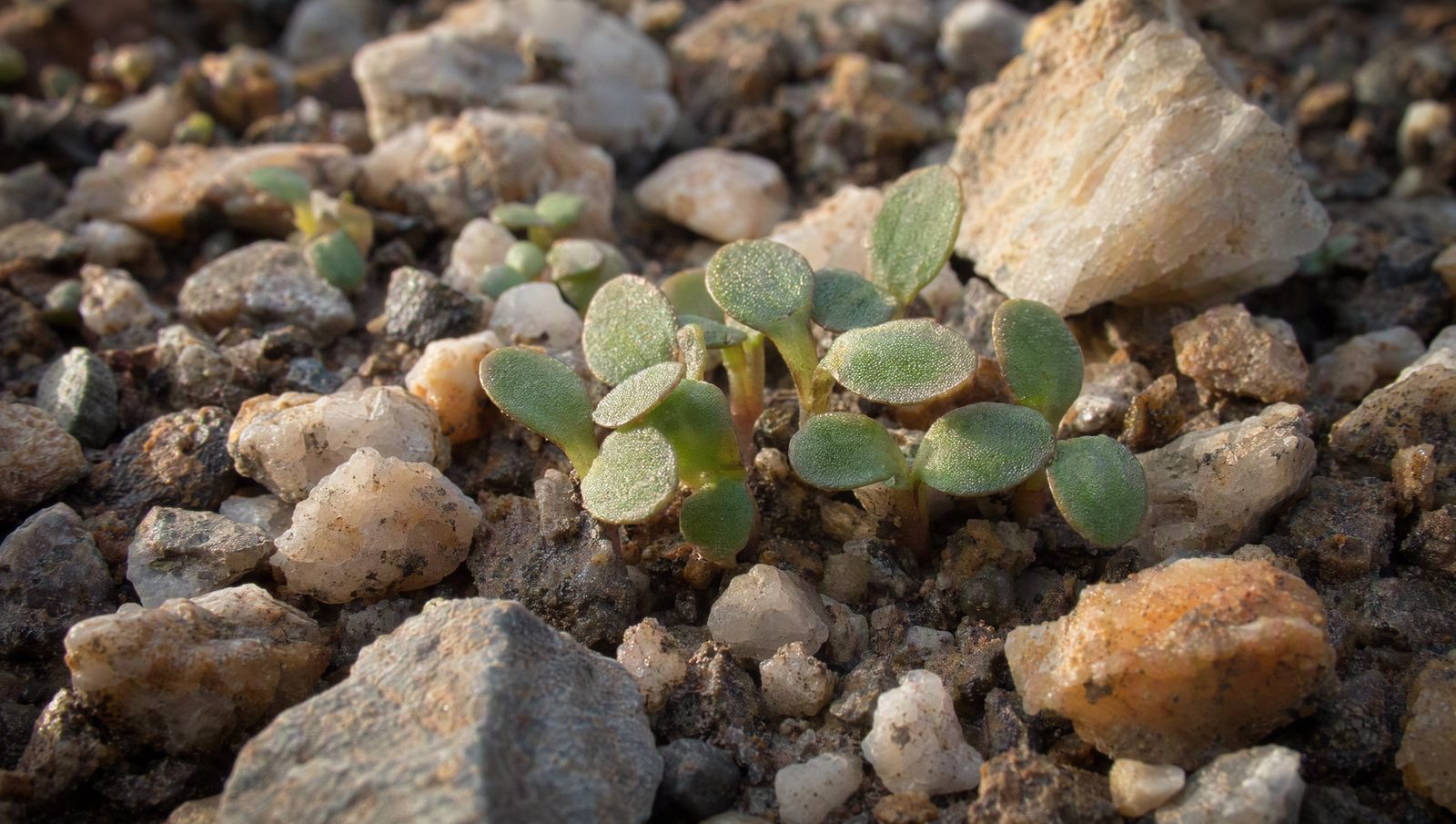
No, fabric doesn't reliably stop weeds — we don't install it, and we don't recommend it. University of Arizona Cooperative Extension's own landscape weed-management guidance (Bulletin #23) lists a three-inch layer of gravel, organic mulch, or synthetic weed cloth together as materials that suppress annual weeds (not perennial weeds) — and separately warns that a different category, impervious plastic mulch, blocks water infiltration and starves plant roots of oxygen. UA doesn't address what happens to any of these once wind-blown dust and debris build up on top; that real-world picture comes from other university extension research. University extension horticulturists elsewhere describe the mechanism directly: dust, leaf litter, and grit blow in and settle on top of and between the rock, sinking down onto the fabric and building up into a thin layer of actual soil — a fresh seedbed sitting right on top of the barrier that was supposed to stop it. The fabric's weave also clogs with that same fine soil over the years, cutting off the water and air exchange the same way an impervious plastic mulch does. A few years in, you're left with a torn liner with weeds rooted through it, which is harder to fix than if it had never gone down.
The same debris-becomes-seedbed problem shows up in plain rock or decomposed granite (DG) with no fabric at all, which is why a "low-maintenance" rock yard isn't a "no-maintenance" one: wind carries in seed from neighboring lots and washes, and dust and organic debris build that same thin seedbed layer right on the surface. Even a proper three-inch layer of gravel is described by UA as suppressing annual weeds, not perennial ones (Bulletin #23) — UA doesn't address what happens once debris builds up on top of it, which is the same problem described above. In practice, a rock or DG yard needs the same two-visit pre-emergent calendar as a planted bed, plus routine blowing and raking, instead of a buried barrier — whether you're maintaining an existing rock yard or considering a xeriscape conversion.
Need a hand?
Sick of pulling weeds every time it rains?
Two pre-emergent visits a year plus post-monsoon cleanup — on a maintenance plan, we handle the calendar.
What are the most common weeds in Phoenix yards, and what actually works on each?
Four show up in almost every Valley yard, and they don't all respond to the same treatment:
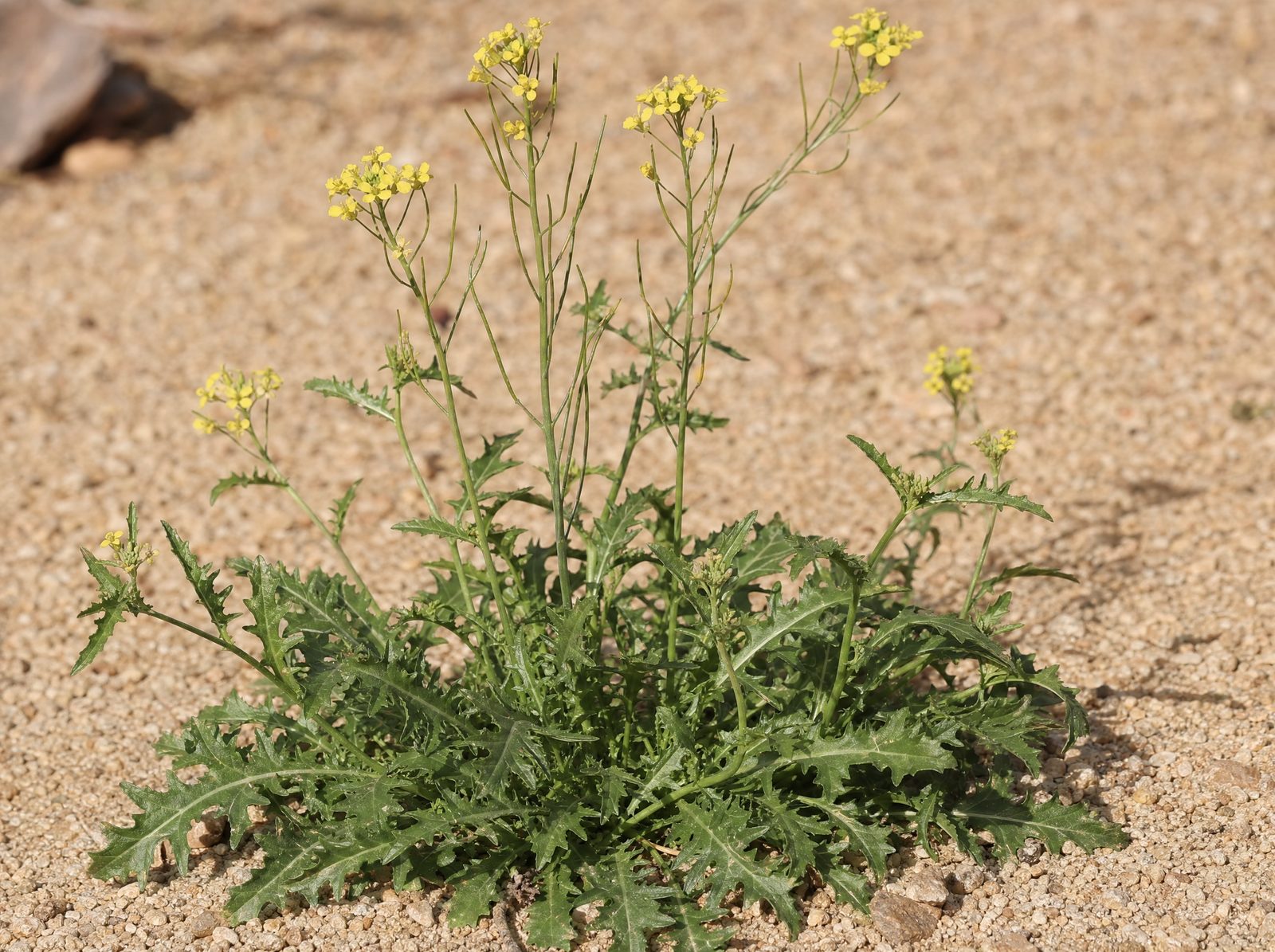
- London rocket and other winter mustards: winter annuals that, per UA Cooperative Extension's general winter-annual life cycle (Bulletin #23, which lists mustards among its examples), germinate from late summer through early spring and die back once temperatures exceed about 85°F. The fall pre-emergent window above is timed to catch it before it's up; once it's a rosette on the ground, hand-pulling before it flowers keeps it from reseeding.
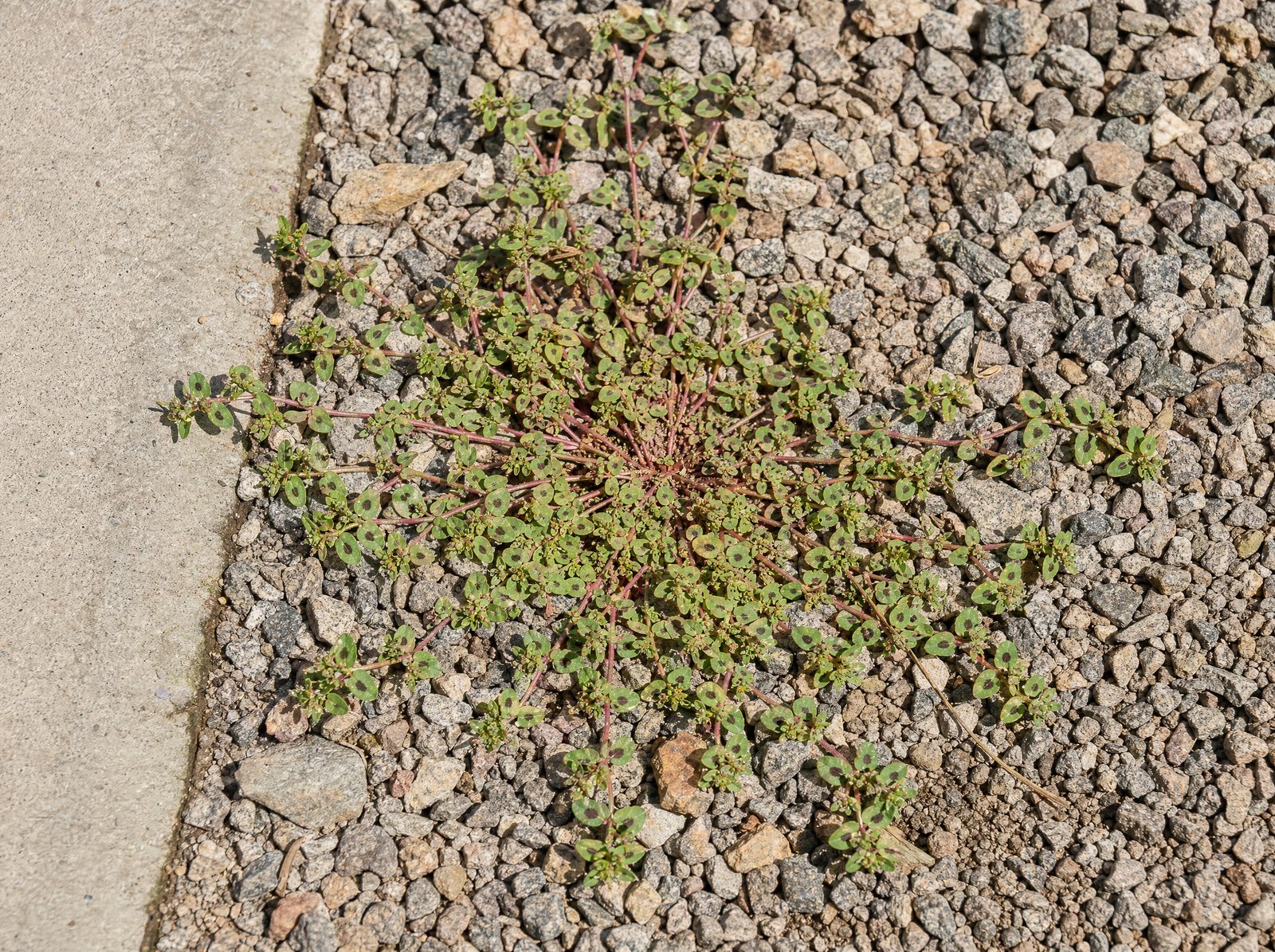
- Spurge: a low, mat-forming summer broadleaf weed that, under good conditions, can complete its life cycle in as little as two weeks, and some spurge species can produce up to 500 seeds per square foot (UA Cooperative Extension, AZ1572). It also has a milky sap that can irritate skin and eyes and often draws stinging ants, so wear gloves when pulling it. Pre-emergent products containing isoxaben have some activity against it; established plants need a post-emergent spot treatment.
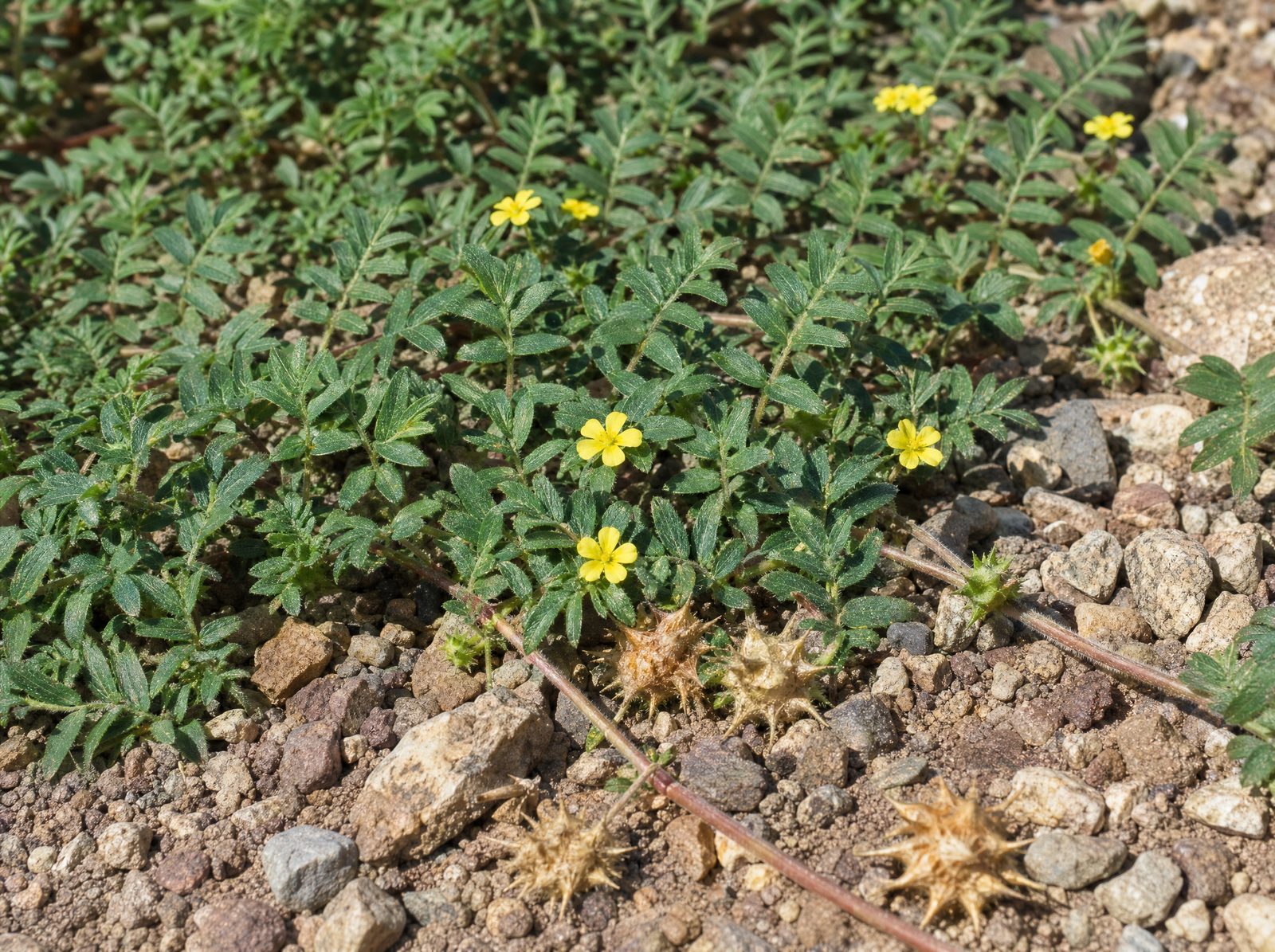
- Puncturevine (goathead): a summer annual that flowers through the hottest months — UA's Northern Arizona guide puts the window at July–September at higher, cooler elevations, and low-desert Phoenix populations commonly start earlier and run later — and drops the spiny burs that puncture tires, shoes, and paws (UA/Arizona Native Plant Society goathead guide). Seed can stay viable in the soil for years, so hand-pulling before it flowers and sweeping up dropped burs matters as much as any spray; because it regrows from seed every year, a spring pre-emergent helps keep new populations from establishing.
- Bermudagrass creeping into gravel beds: unlike the weeds above, this is a perennial that spreads from existing stolons and rhizomes, not fresh seed — so pre-emergent doesn't touch it once it's rooted in (UA Cooperative Extension, Bulletin #23). It needs a targeted post-emergent systemic treatment applied while it's actively growing, not while stressed or semi-dormant.
Getting the right tool on the right weed at the right time of year is most of what a professional weed control visit is actually doing.
Is pre-emergent weed control safe to use around desert plants, citrus trees, and pets?
Used correctly, yes — but correctly is doing real work in that sentence, and it starts with the product label. Under federal law, whoever applies a pesticide has to follow the label's instructions exactly; that label is also where you'll find any restrictions around food-bearing trees like citrus, listed desirable plants to keep spray or granules off of, and any reentry time to keep kids and pets off treated ground until it's watered in (University of Arizona Cooperative Extension, Bulletin #23). UA's own spurge guidance is explicit that pre-emergent products should never go on a vegetable garden, and that post-emergent applications need extra care to avoid drift onto desirable plants (AZ1572) — the same caution applies to drift near citrus, ornamentals, and anything else you're not trying to kill.
Pre-emergent also has to be watered in — by irrigation or rain, within the window the label specifies — or weed control will be reduced, since the active ingredient can otherwise be lost to sunlight or volatilization before it binds to the soil (University of Arizona Turfgrass Extension, Turf Tips) — the exact window varies by product, and it's a bigger risk on drip-irrigated beds than on lawns watered on a fixed schedule. We keep this general on purpose: which product is appropriate for a given bed, citrus grove, or pet-heavy yard is a label-and-site-specific call, not a one-size answer, so we read the label for your property rather than assume.
Can Victor's Landscaping handle weed control for my Phoenix property?
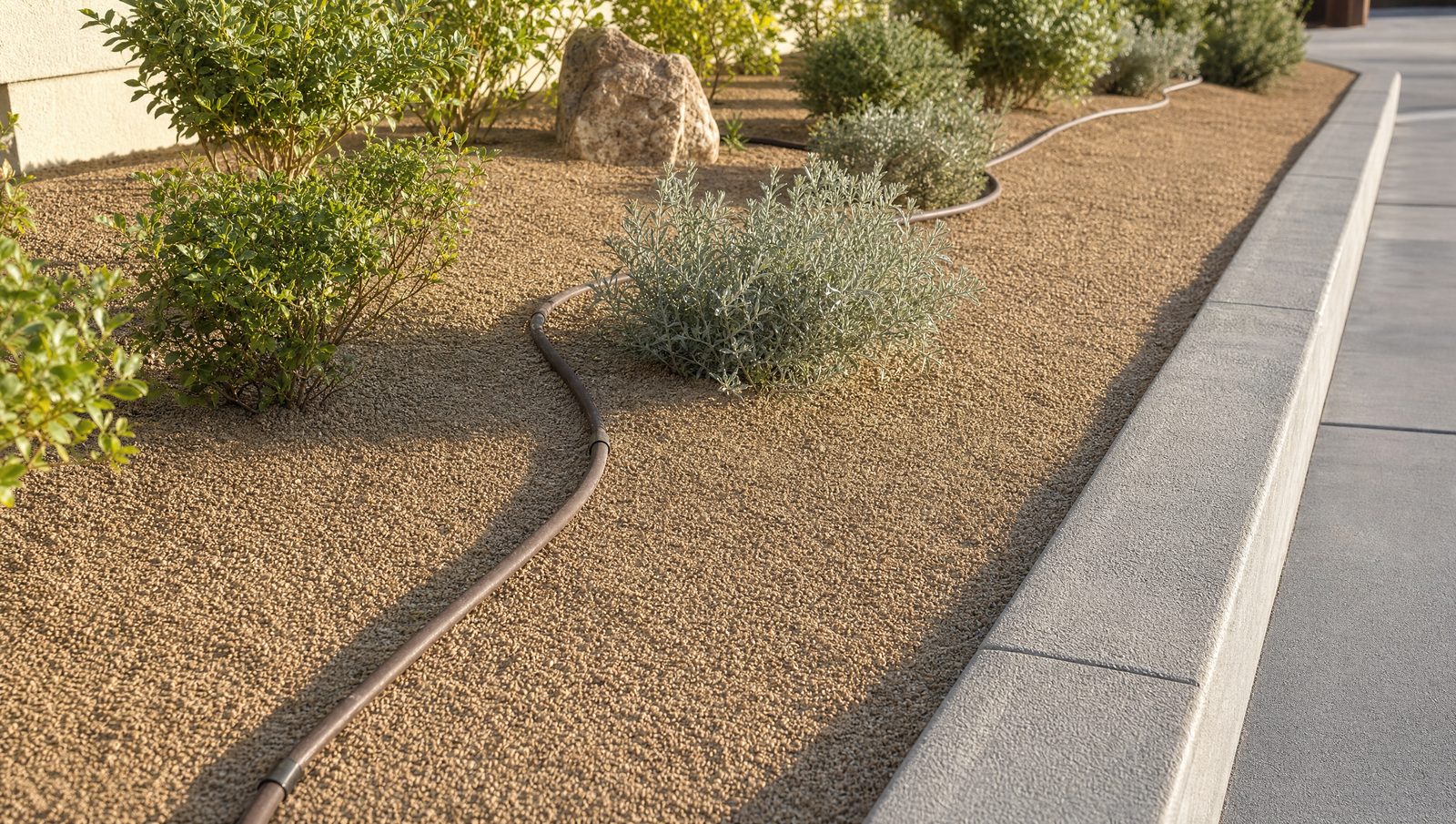
Yes. Victor's Landscaping is a family-owned, licensed Arizona contractor (ROC #207713) serving the Phoenix metro since 1999, with a 4.5-star average across 865+ reviews. Our weed control program runs the fall and late-winter/spring pre-emergent visits as standing dates, adds a post-emergent spot-treatment pass once monsoon rain flushes summer weeds through, and skips landscape fabric in favor of a program that actually holds up over time. It's built into standing residential maintenance plans for homeowners and into commercial and HOA contracts across the Valley, so the calendar doesn't depend on anyone remembering it.
Get a Free Landscaping Quote
Tell us about your property and we’ll follow up fast — or call ☎ (602) 439-5192.