
When to Overseed & Scalp Bermuda Grass in Phoenix
Straight answers for Phoenix-area homeowners & property managers — from a licensed local landscaping contractor serving the Valley since 1999.
☎ (602) 439-5192 Request a Free Quote
- ROC #207713
- Licensed & Insured
- Family-owned since 1999
- 4.5★ · 865+ reviews
In the Phoenix low desert, overseed dormant Bermuda grass with perennial ryegrass from mid-September through mid-October — the first two weeks of October are ideal (University of Arizona Extension cites mid-October for the Phoenix area), once nighttime lows settle around 55-60°F and the Bermuda is sliding into dormancy as nights cool toward and below ~65°F. Reverse the process in spring (late April through May), when nights consistently stay above ~65°F: gradually lower your mowing height to let Bermuda take back over. Avoid a hard \"scalp\" in spring — University of Arizona research shows aggressive scalping weakens the Bermuda rather than speeding the transition. A true low scalp belongs only at fall overseeding prep, not spring transition.
When exactly should I overseed Bermuda grass in Phoenix?
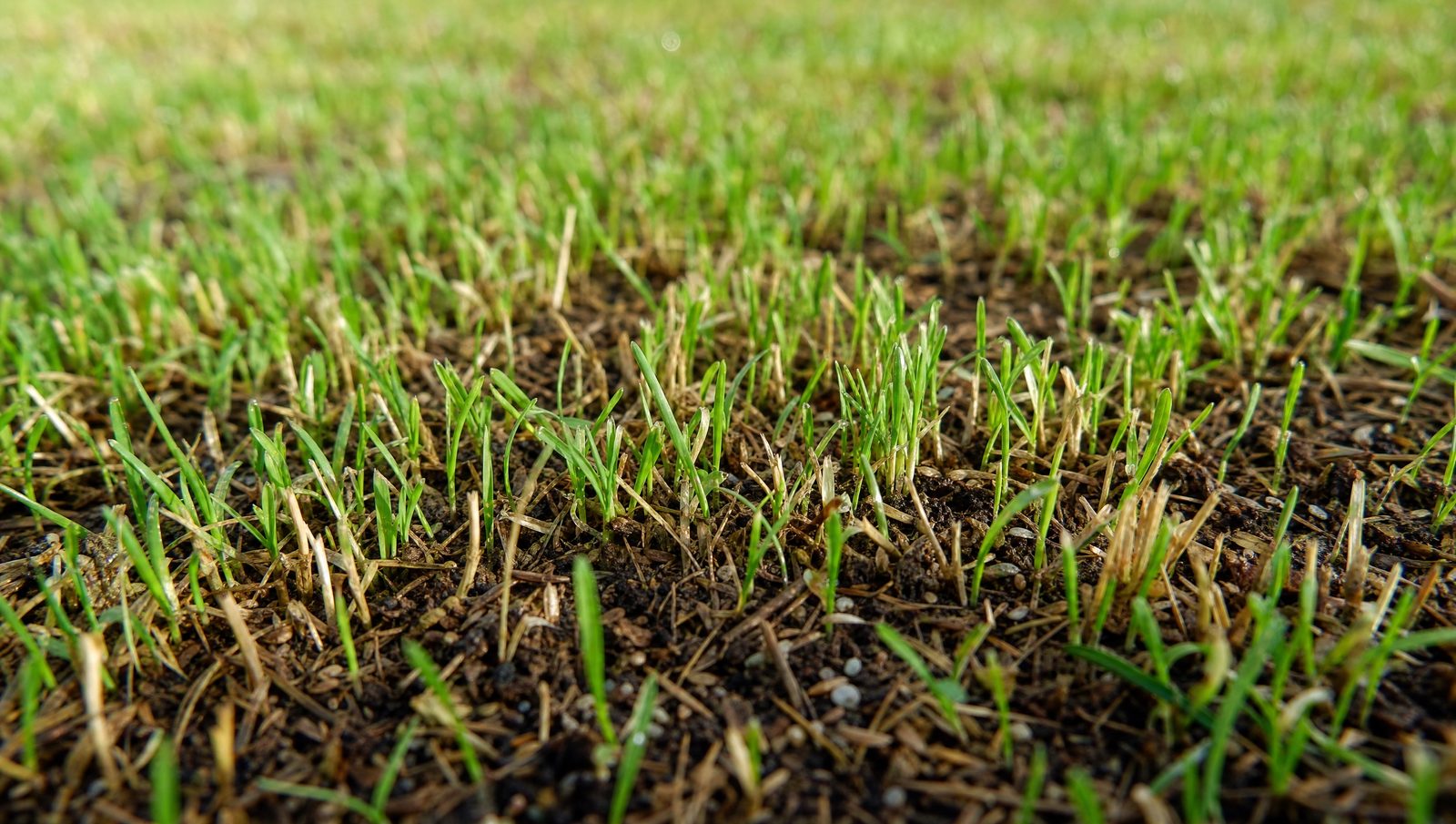
Target mid-September to mid-October, with the first two weeks of October being the sweet spot for most of the Phoenix and West Valley metro (University of Arizona Extension cites mid-October for the Phoenix area). The trigger isn't the calendar alone — it's temperature:
- Nighttime lows around 55-60°F and daytime highs in the low 80s
- Bermuda entering dormancy as nights cool toward and below ~65°F, which slows the warm-season grass enough that ryegrass seedlings aren't outcompeted
Seed too early (while it's still hot) and the warm-season Bermuda smothers the new ryegrass; seed too late (after a hard cold snap) and germination stalls. In a warm fall, lean toward the later end of the window. Our crews track conditions across Phoenix, Peoria, Glendale, and Surprise because microclimates can differ by a week or more — see our residential maintenance service for hands-off seasonal timing.
The Bermuda Overseed Timeline
One fall-to-spring cycle, start to finish.
1
Prep
~1 week before
Scalp low (½–1″), bag clippings
2
Seed
Seed day
Mid-Sep–mid-Oct (first 2 weeks of Oct ideal) · perennial ryegrass
3
Water
Days 1–14
Light water ~3×/day
4
Taper
Weeks 3–4
Taper to deeper watering
5
Transition
Spring (late Apr–May)
Transition back — don’t scalp
Ready when: nighttime lows ~55–60°F
How do I prep and scalp my Bermuda before fall overseeding?
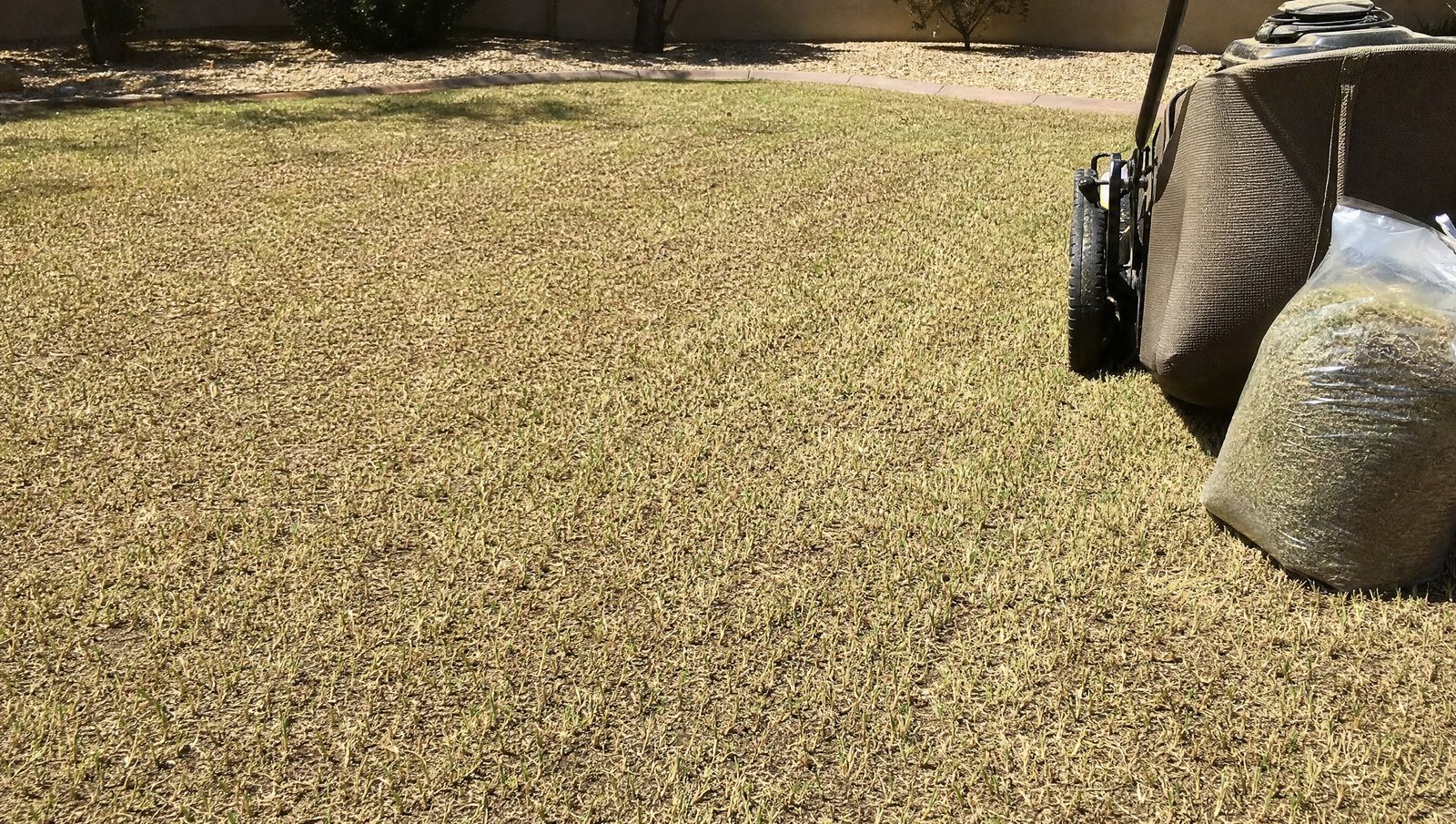
This is the one time a real low cut is appropriate. About a week before seeding:
- Mow low — drop the Bermuda down to roughly 1/2 to 1 inch to thin the canopy so seed reaches the soil.
- Bag and remove the clippings and thatch — ryegrass seed needs soil contact, not a mat of debris. Light verticutting in two directions helps open the canopy.
- Spread perennial ryegrass at about 10-15 lbs per 1,000 sq ft — University of Arizona recommends roughly 12-15 lbs for home lawns; go heavier on thin or shaded turf, lighter on dense lawns.
- Lightly topdress or rake so seed settles into the surface, then begin watering.
Use perennial (not annual) ryegrass for a finer texture and a smoother spring transition. Note the difference from spring: fall prep is a genuine scalp; spring transition is a gradual mow-down, never a hard scalp.
Need a hand?
Want us to handle the scalp-and-seed?
We time it to the weather, seed at the right rate, and set your watering.
How should I water and mow newly overseeded ryegrass?
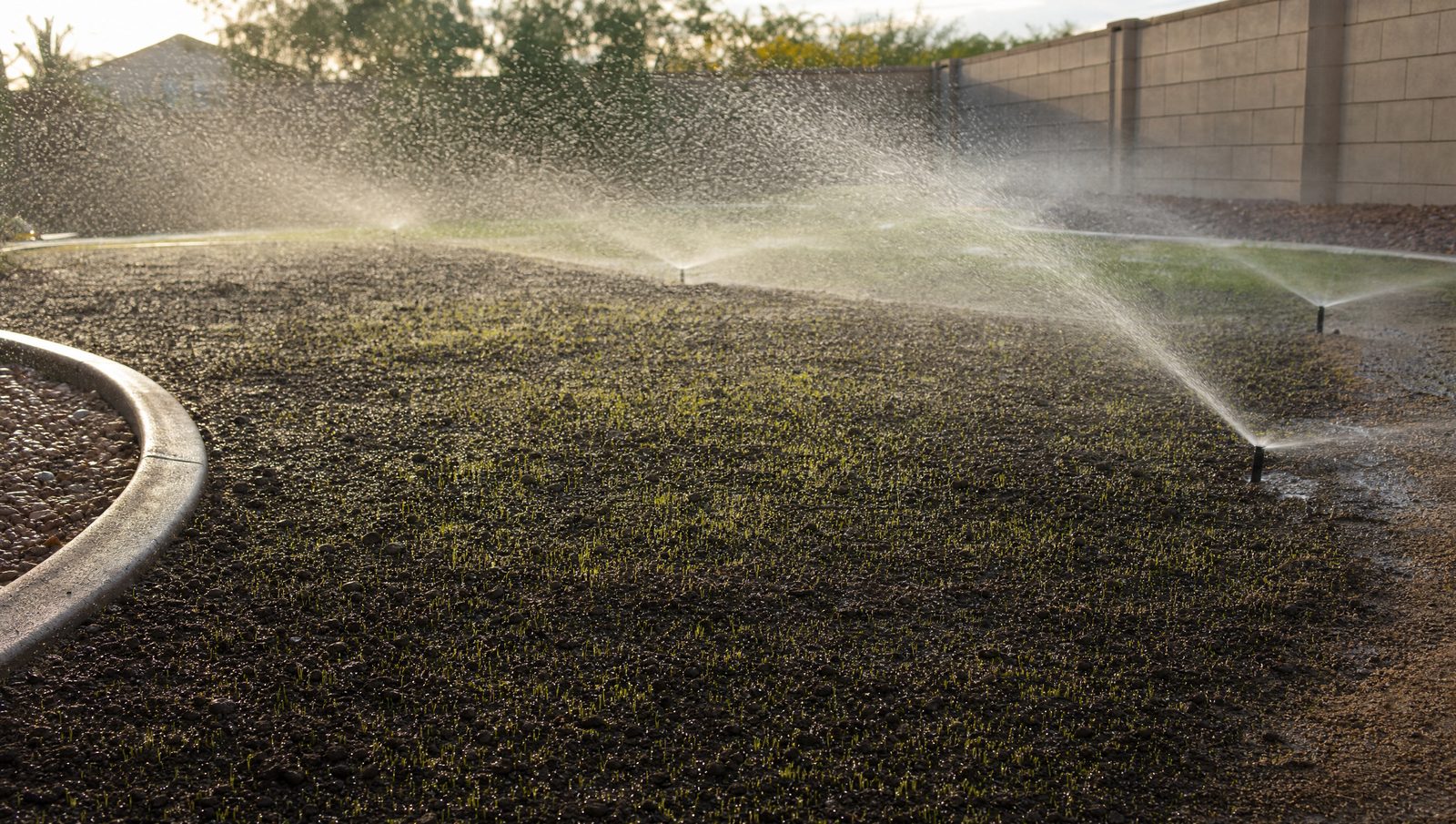
Germination typically takes about 5-10 days, and during that window the seedbed must stay consistently moist:
- First ~2 weeks: water lightly about 3 times per day (University of Arizona suggests mid-day waterings) to keep just the top 1/2 inch of soil damp — never let it dry out or crust.
- Weeks 3-4: taper to fewer, deeper waterings — roughly every other day — as roots establish.
- First mow: wait until ryegrass reaches about 2 inches, then cut to ~1.5 inches with a sharp blade.
Through winter, maintain ryegrass around 1.5-2 inches. Frequent shallow watering during germination is the part most homeowners get wrong — too little and the seed dies, too much and it washes or rots. Dialed-in coverage from a properly tuned system matters here; our irrigation and sprinkler service can adjust heads and cycles for even germination.
First ~2 weeks~3x/day, light — top 1/2 in. moist
Weeks 3–4Taper — every other day, deeper
First mowAt ~2 in. → cut to ~1.5 in.
When and how do I transition back to Bermuda in spring?
Start the spring transition in late April through May, once nighttime temperatures consistently stay above about 65°F and the Bermuda is actively waking from dormancy. The key, per University of Arizona research, is not to scalp:
- Gradually lower the mowing height and mow more often — thin the ryegrass canopy over several mowings rather than scalping.
- Reduce watering frequency to stress the cool-season ryegrass while the heat-loving Bermuda strengthens.
- Let summer heat finish the job — as temps climb, ryegrass fades naturally and Bermuda fills in. (U of A also notes that once Bermuda makes up ~80% of the lawn, a light verticut can help remove the remaining ryegrass.)
Repeated hard scalping can weaken the Bermuda and set the transition back, leaving bare dirt. Once Bermuda dominates, keep the cut around 1.5 inches and avoid cutting it extremely short.
Need a hand?
Want us to handle the scalp-and-seed?
We time it to the weather, seed at the right rate, and set your watering.
Is overseeding worth it in Phoenix, or should I skip it?
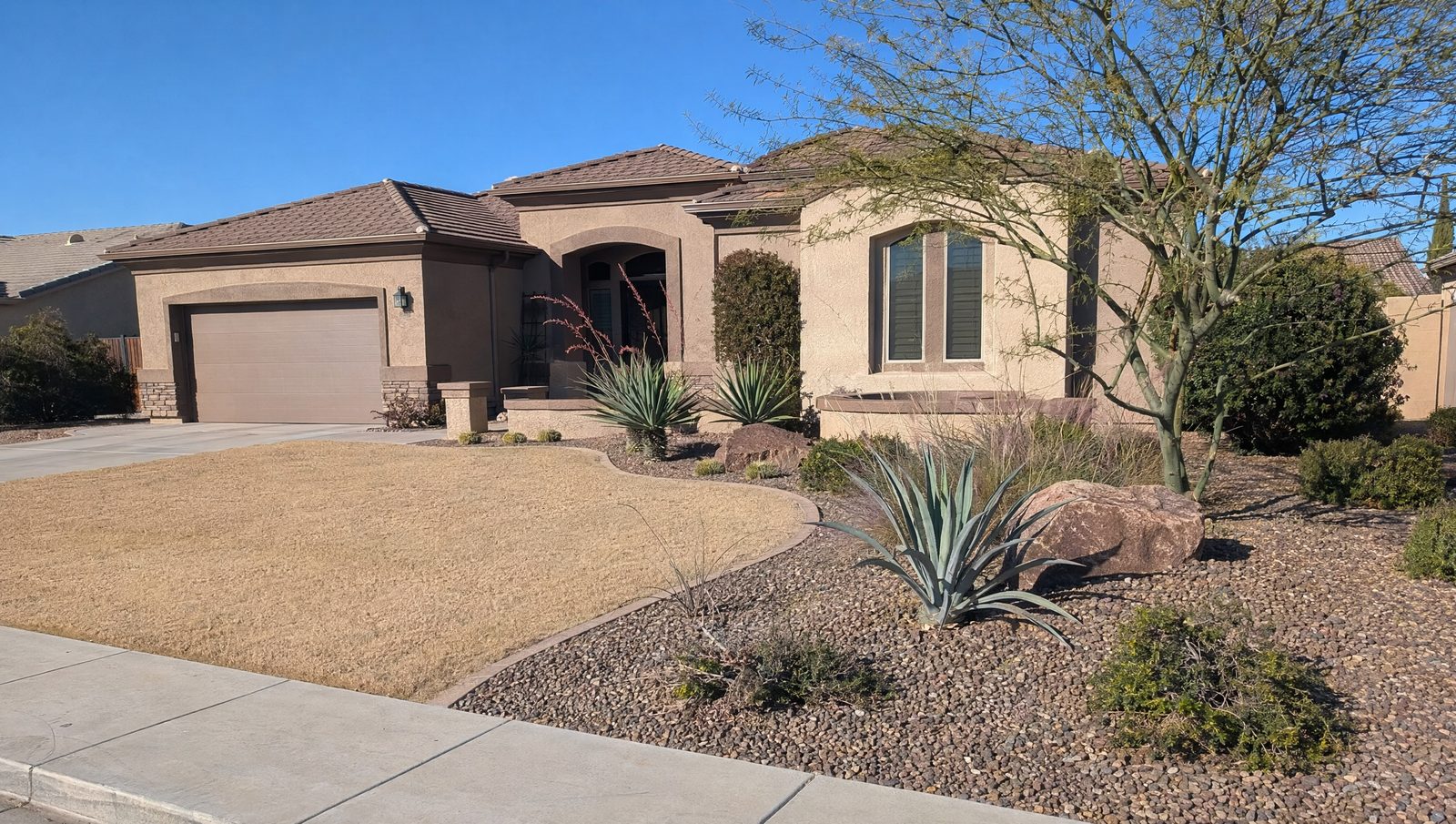
It's a real tradeoff, and reasonable Phoenix homeowners go both ways:
- Skip it (water-wise): Several Valley cities — including Tempe and Scottsdale — actively discourage overseeding. Dormant Bermuda needs watering only about once a month in winter, while overseeded ryegrass needs frequent (roughly 3-times-a-day) watering to germinate. Water authorities estimate you can save on the order of 8,000 gallons per 1,000 sq ft per season by not overseeding, plus lower winter water bills.
- Do it (year-round green): If you want a green, usable lawn for winter gatherings, holidays, kids, or pets, overseeding delivers color from roughly October through May that dormant tan Bermuda can't.
One horticultural caveat: overseeding every year can slow Bermuda's spring recovery because the ryegrass competes during the window when Bermuda would otherwise start storing energy. If you value water savings or have a low-traffic yard, letting Bermuda go dormant is perfectly healthy. Whichever you choose, confirm any current watering-day or conservation rules with the City of Phoenix (or your specific municipality), since those can change.
Can Victor's Landscaping handle overseeding and spring transition for me?
Yes. Victor's Landscaping is a family-owned, full-service Phoenix-area contractor in business since 1999 (Arizona ROC #207713, bonded and insured), and seasonal turf transition is core to our residential and commercial maintenance programs. We handle the full cycle: fall scalp-and-seed prep, the right perennial ryegrass rate for your lawn, germination watering tuned on your sprinkler system, and a gradual, no-scalp spring transition that protects your Bermuda. We serve homeowners across Phoenix, Peoria, Glendale, and the wider West Valley, with 4.5 stars across 865+ reviews. Costs vary with lot size, turf condition, and mowing frequency, so we scope each lawn individually rather than quoting a flat rate.
Get a Free Landscaping Quote
Tell us about your property and we’ll follow up fast — or call ☎ (602) 439-5192.