
Phoenix Monsoon Yard-Prep Checklist (Protect Your Landscape)
Straight answers for Phoenix-area homeowners & property managers — from a licensed local landscaping contractor serving the Valley since 1999.
☎ (602) 439-5192 Request a Free Quote
- ROC #207713
- Licensed & Insured
- Family-owned since 1999
- 4.5★ · 865+ reviews
Arizona's monsoon season officially runs June 15 through September 30 (a fixed calendar window the National Weather Service adopted in 2008), so the best time to prep a Phoenix yard is late May through mid-June, before the first big storms hit. Storms rarely arrive on day one, but mid-June is the deadline to aim for. The four jobs that matter most: professionally thin (don't over-cut) your trees so wind passes through the canopy instead of toppling top-heavy limbs, fix drainage and erosion on flat or sloped desert lots, secure or store loose items that 40-60 mph haboob gusts turn into projectiles, and line up post-storm debris cleanup in advance, since demand spikes the moment a storm passes. Victor's Landscaping (AZ ROC #207713, family-owned since 1999) handles all four across the West Valley and greater Phoenix.
When does Phoenix monsoon season start, and when should I prep my yard?
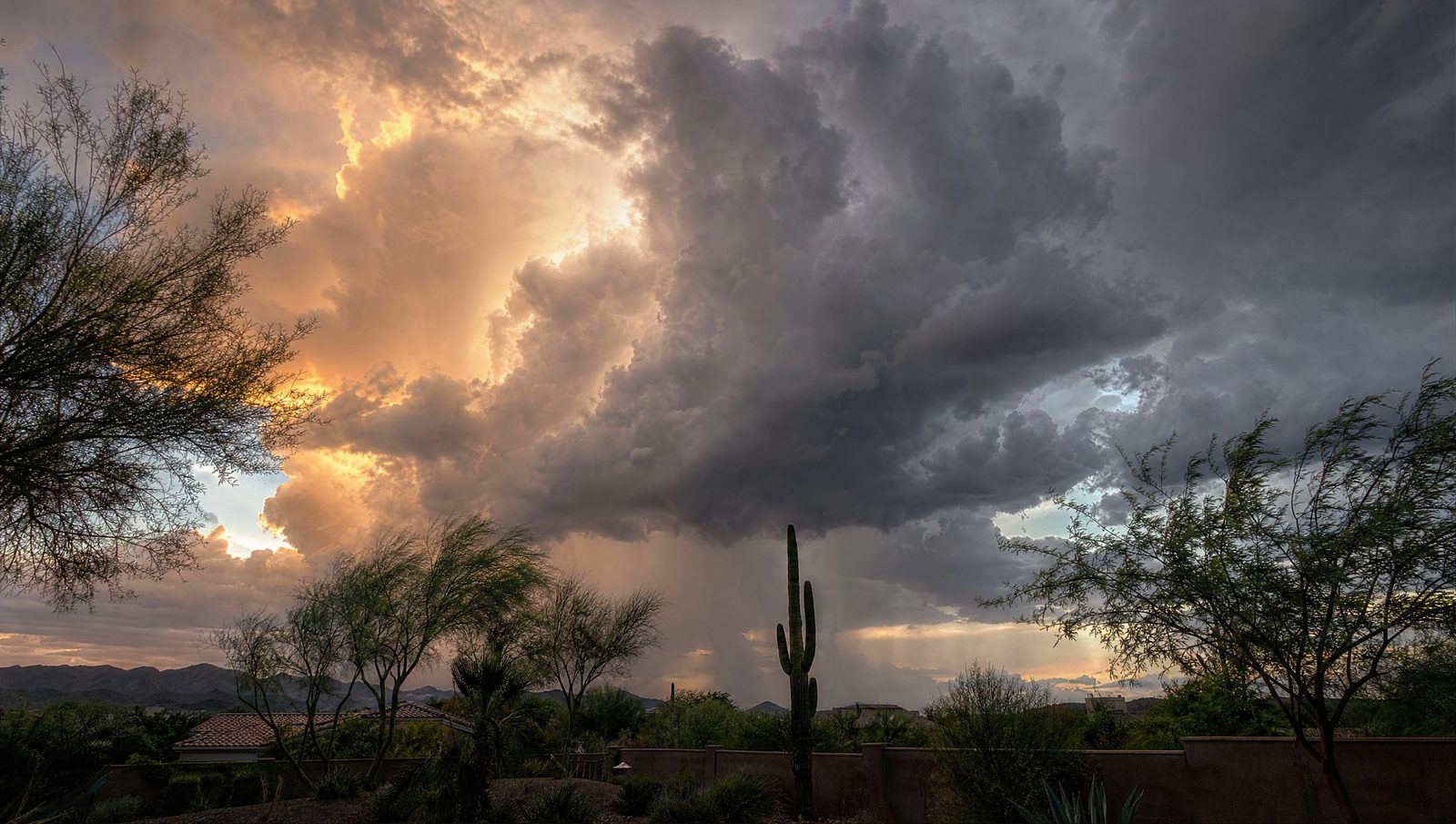
The National Weather Service defines Arizona's monsoon season as June 15 to September 30 — a fixed calendar window adopted in 2008 to replace the older dew-point-based start date. Storms don't always arrive on day one, but you should treat mid-June as the deadline for prep work.
The ideal time to schedule tree trimming and drainage work is late May through early June. That gives you a buffer before storm activity typically peaks (often July and August) and avoids the scramble that happens once branches are already on the ground. If you miss that window, it's still worth acting in season; just expect tree crews and cleanup services to book up fast during active storm weeks.
The Monsoon Prep Timeline
One season, three jobs — before, during, and after the storms.
1
Before the season
Late May – mid-June
Thin & trim trees, fix drainage, secure loose items
2
Storm season
June 15 – September 30
NWS monsoon window · storms typically peak in July & August
3
After each storm
Cleanup & assessment
Stay clear of downed lines, haul debris, triage broken limbs
Deadline: prep work done by mid-June
How should I trim my trees to prevent monsoon blow-downs?
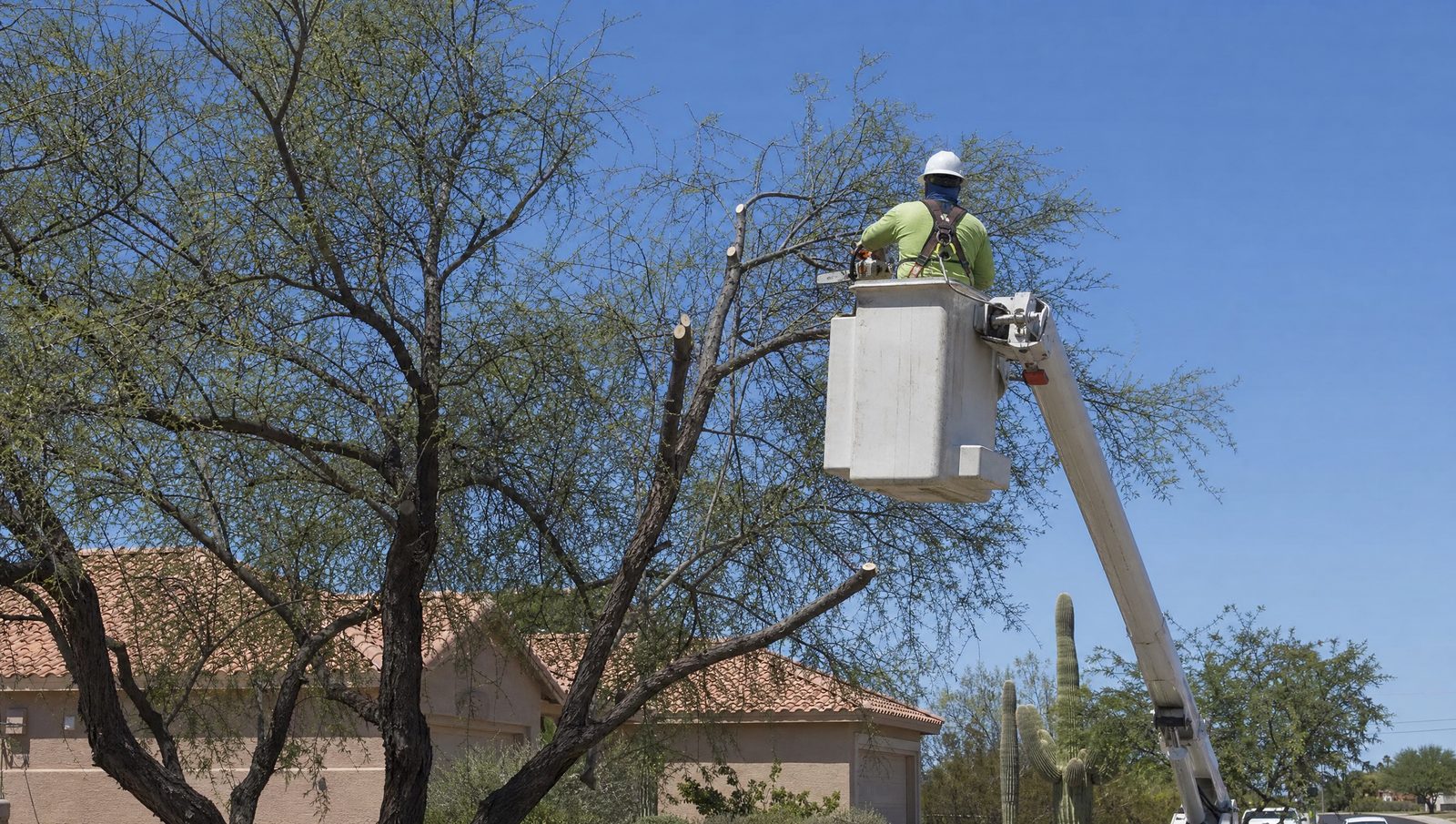
The goal is to let wind flow through the canopy rather than push against a dense, sail-like crown. A trained crew does this with crown thinning: selectively removing crossing, dead, weak, and overextended branches to open the canopy and reduce wind resistance.
The critical caution for the low desert: do not over-thin. A common, damaging mistake is "lion-tailing" — stripping out the inner branches so foliage clumps only at the ends. That shifts weight to the outer canopy, makes a tree top-heavy, and leaves it more likely to fail in a storm, not less. Desert species like mesquite and palo verde are especially prone to being over-thinned. Industry pruning standards (ISA Best Management Practices and ANSI A300) advise removing no more than about 25% of the live canopy in a single year.
- Mesquites and palo verdes: thin lightly, balance the crown, remove deadwood.
- Palms: remove only dead, loose, or hanging fronds; don't over-prune the green crown.
- Any tree near the house, driveway, or power lines: prioritize it.
This structural thinning is the heart of monsoon prep, and it's where Victor's Landscaping's residential tree service focuses — opening the canopy so it sheds wind without harming the tree.
Need a hand?
Worried about a limb coming down?
Storm-prep trimming now, cleanup after — ISA Certified Arborist on staff.
What does monsoon tree trimming cost in the Phoenix area?
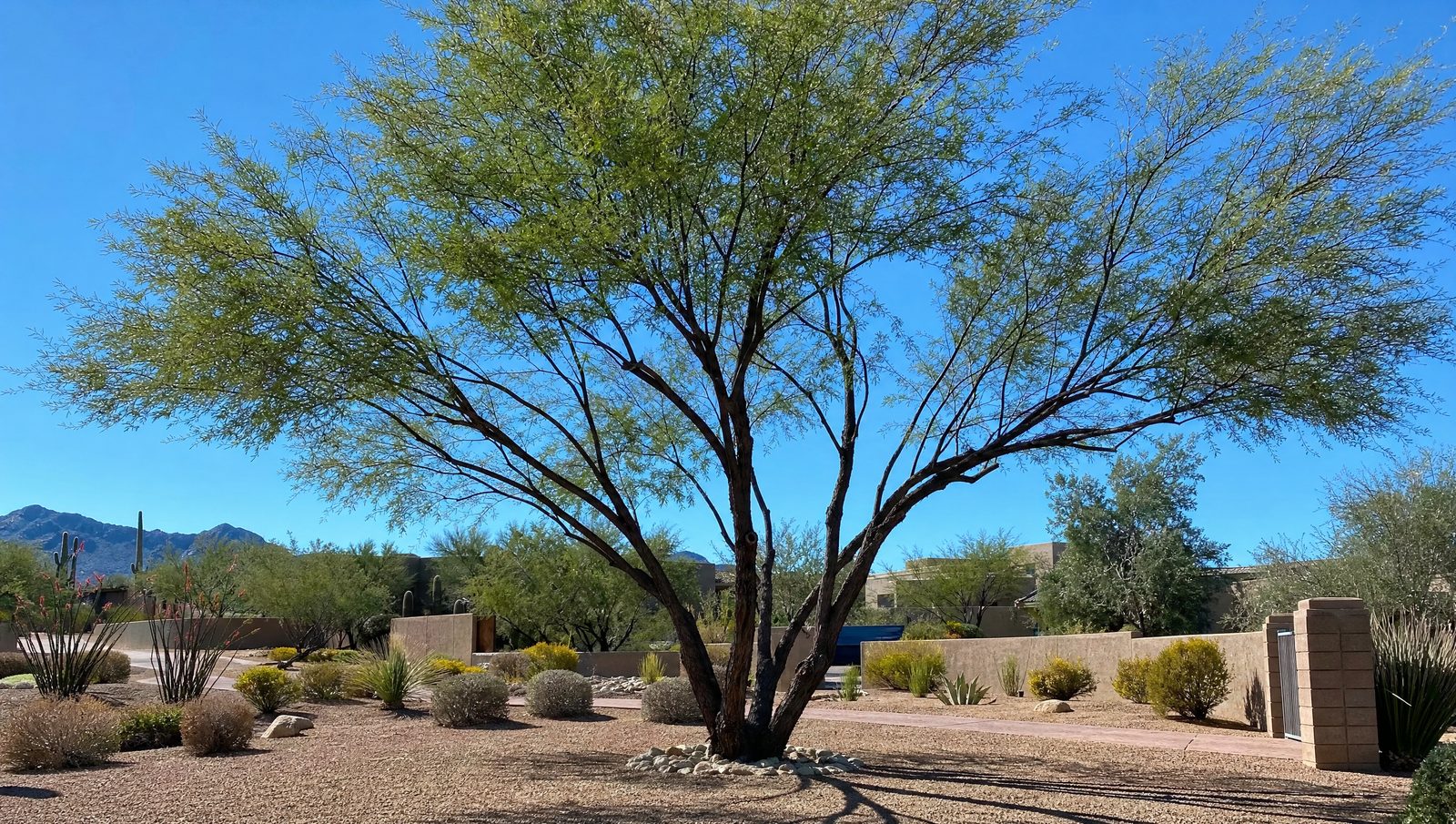
Costs vary by tree size, species, location on the lot, and how overgrown it is, so treat these as estimates, not quotes. Local pricing data puts a typical Phoenix tree-trimming job in the few-hundred-dollar range, with large or neglected trees running higher:
- Smaller trees: often a few hundred dollars or less each, depending on access.
- Mature mesquite or similar shade trees: commonly in the $350-$600 range, with very large or long-neglected specimens running $800-$1,000+.
- Palms: commonly $100-$500; tall palms cost more because of the access and equipment required.
What moves the price: number and size of trees, how long since the last trim, proximity to structures or power lines, and whether debris haul-away is included. Bundling several trees in one visit before monsoon usually costs less per tree than emergency calls after a storm. Always get a written estimate — a reputable contractor (Victor's Landscaping, AZ ROC #207713, bonded and insured) will walk the property and price the actual work rather than quoting blind.
Smaller treesA few hundred or less
Mature mesquite$350–$600 · large $800–$1,000+
Palms$100–$500
How do I protect my yard from monsoon flooding and erosion?
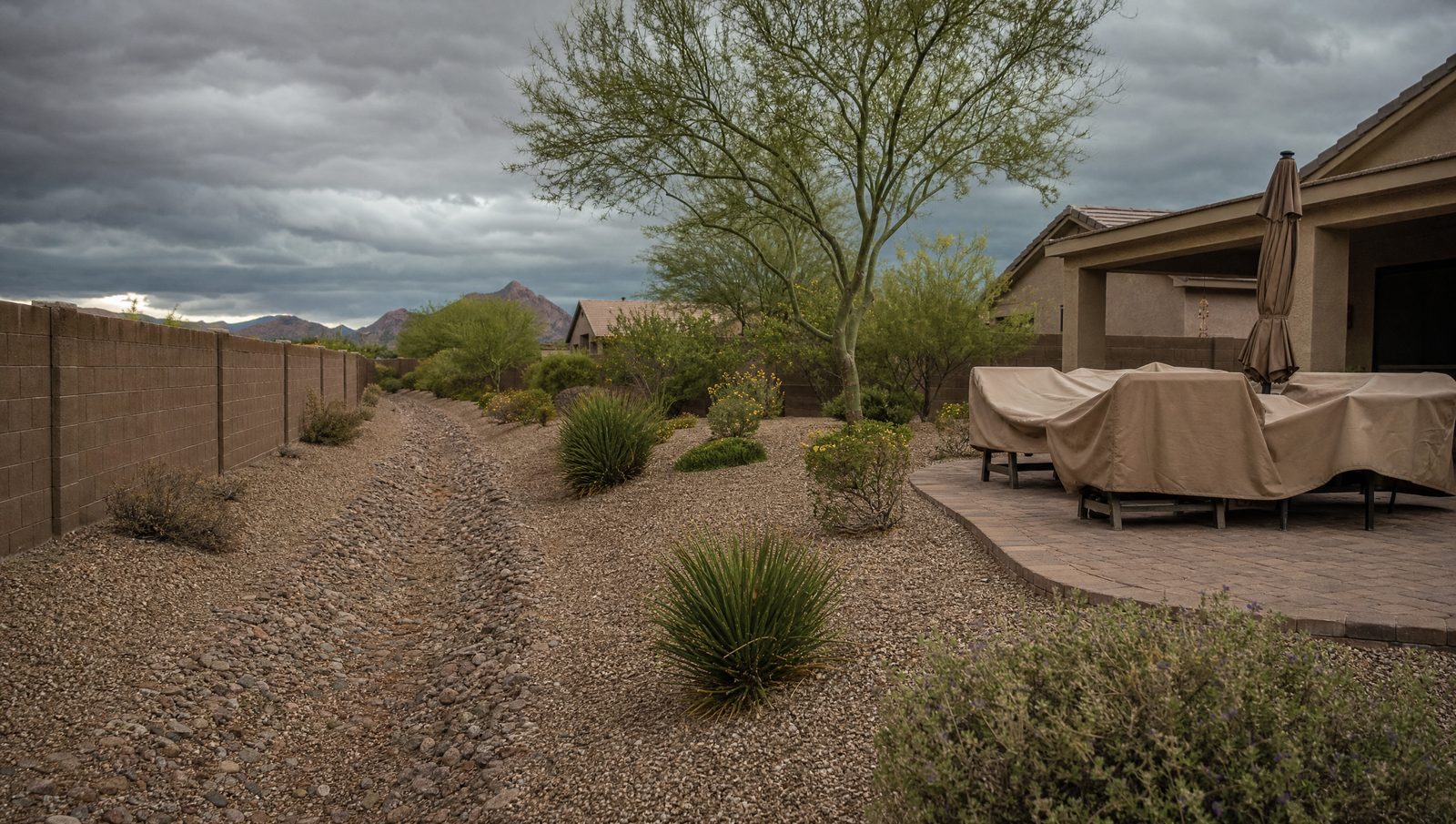
Phoenix's flat lots, hard caliche soil, and sudden downpours cause fast runoff that washes out decomposed granite (DG), undermines plants, and pools against foundations — caliche can act as a drainage barrier, so water that can't soak in sheets across the surface. Pre-season fixes:
- Grade away from the house: soil should slope down and away from the foundation so water sheds outward (a common target is roughly 1 inch of fall per foot for the first several feet).
- Reset and stabilize DG: top off thinned areas and use borders or a heavier rock on slopes where granite tends to migrate.
- Add drainage where water collects: swales, French drains, or area drains for chronic low spots; permeable pavers can help where runoff is heavy.
- Check irrigation lines and emitters so storm runoff isn't compounding an existing leak.
Erosion and grading work is part of a full landscape buildout. If you're already rethinking the yard, our residential landscaping and irrigation and sprinkler services teams design grading and drainage that hold up through monsoon. Note that work redirecting drainage onto a neighbor's property or a wash may be subject to local rules — confirm requirements with the City of Phoenix (or your municipality, such as Peoria, Glendale, or Surprise) before major grading.
Need a hand?
Worried about a limb coming down?
Storm-prep trimming now, cleanup after — ISA Certified Arborist on staff.
What loose items and yard features should I secure before a storm?
Haboobs and microbursts routinely bring 40-60 mph gusts (microbursts can be stronger) that turn yard objects into projectiles. Before storms arrive, secure or store:
- Patio furniture, umbrellas, cushions, and outdoor rugs.
- Potted plants and lightweight planters (group them in a sheltered corner).
- Grills, shade sails, pop-up canopies, and trampolines.
- Trash and recycle bins (keep them latched or in the garage on storm days).
- Decorations, garden art, and anything not bolted down.
Also check that shade structures, ramadas, and fence panels are anchored, and that gravel hasn't built up against drains or gates. A quick pre-monsoon walk-through, paired with a regular maintenance plan, keeps the yard storm-ready all season instead of scrambling each time a wall of dust rolls in.
What's the fastest way to handle post-storm cleanup and debris haul-away?
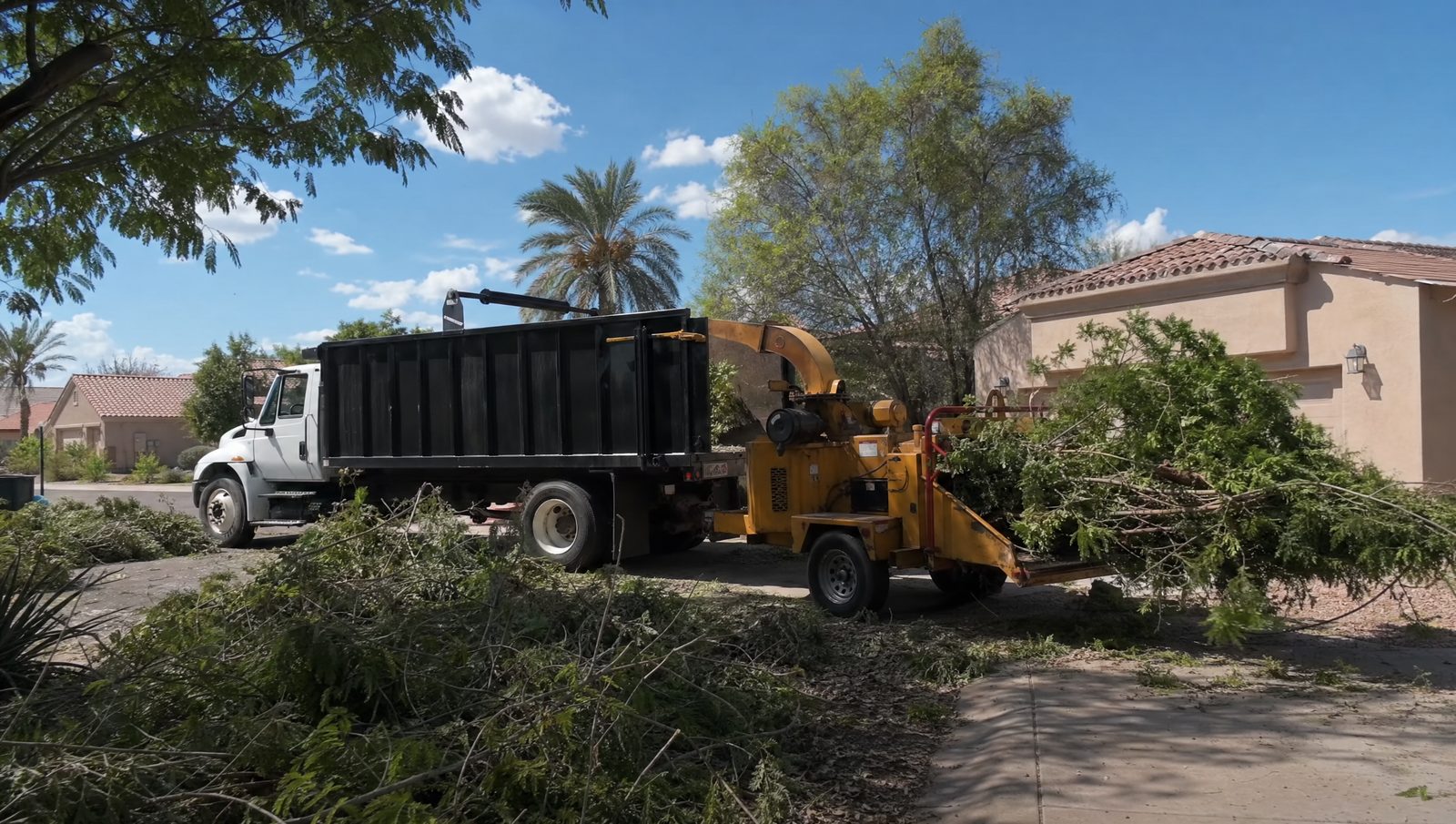
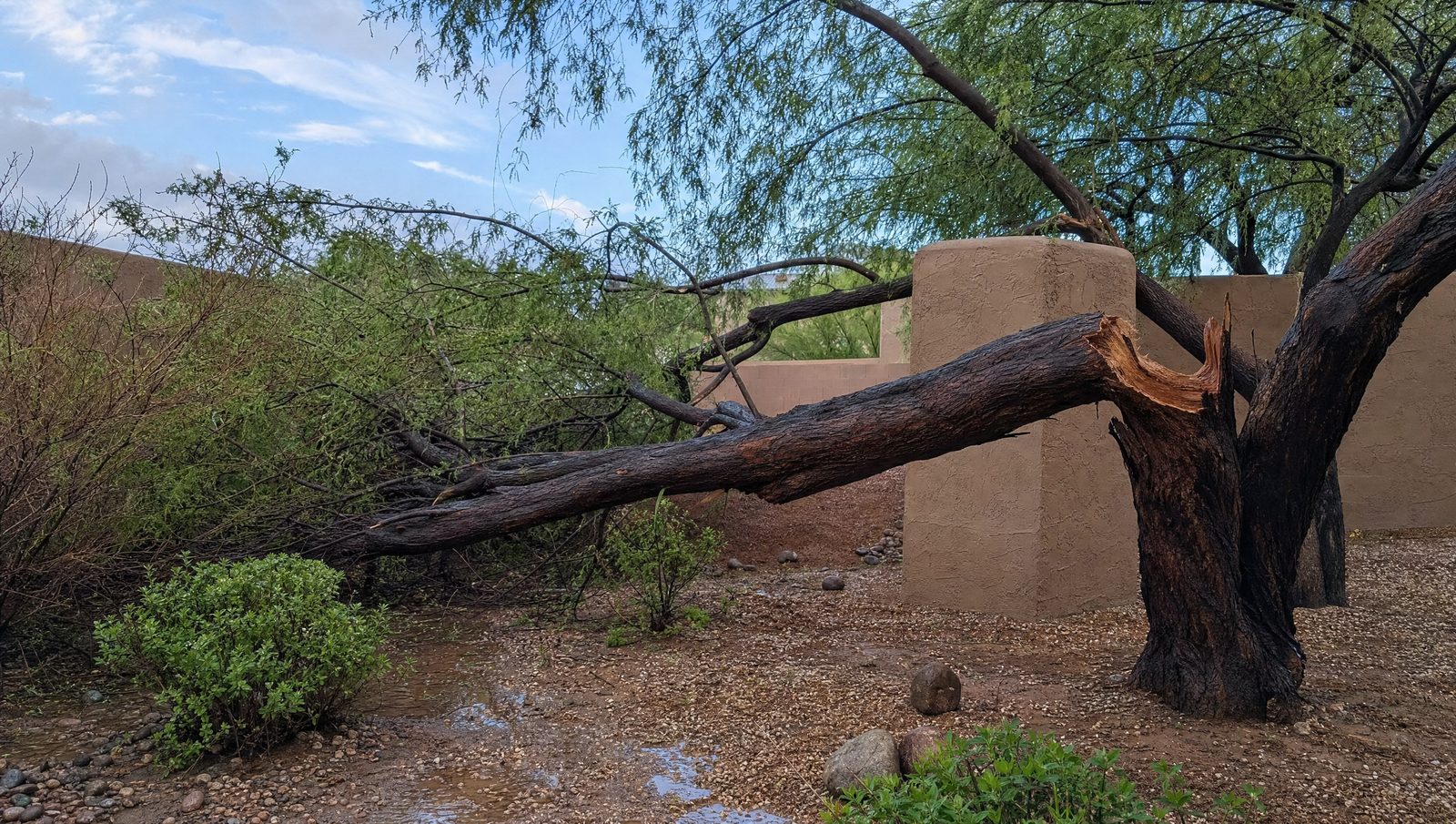
After a storm, demand for tree crews and debris hauling spikes, so the customers served first are usually the ones who already have a contractor relationship in place. Plan for:
- Safety first: stay clear of any limbs touching or near power lines and call your utility, not a landscaper.
- Debris haul-away: costs scale with load size — a single dump run is modest, while a full-yard storm cleanup can run several hundred dollars or more depending on volume.
- Free options: many Valley cities run green-waste drop-off or activate emergency curbside pickup after major storms — confirm current details with your city.
- Tree triage: partial blow-downs often need professional corrective pruning or removal so the tree can recover or be safely taken down. Removing a tree (rather than trimming it) can trigger added rules — some Valley cities such as Peoria have native-plant ordinances, and Arizona's native plant law requires advance notice to the Arizona Department of Agriculture before destroying protected native plants — so confirm permit requirements with the City of Phoenix or your municipality before removing a protected or large tree.
Victor's Landscaping handles emergency cleanup and debris removal for both homes and businesses; our commercial maintenance clients often set up standing post-storm response so parking lots and entrances are clear by morning. With 4.5 stars across 865+ reviews, fast, reliable cleanup is one of the things customers mention most — see our reviews or check areas we serve across the West Valley.
Get a Free Landscaping Quote
Tell us about your property and we’ll follow up fast — or call ☎ (602) 439-5192.